
Tourism
The Stâncile Prutului route represents a fascinating journey through the heart of the wild nature of the Republic of Moldova, which promises to offer you an unforgettable experience. Located in the north-east of the country, on the border with Ukraine, the Prut Rocks are impressive geological formations made up of calcareous rocks carved over millennia by the waters of the Prut River. This route offers the opportunity to explore spectacular landscapes, dense forests and rich biodiversity, while taking you along the banks of the Prut River, revealing some of the natural beauty of the Republic of Moldova. It is an ideal place for hiking, bird watching and connecting with nature in a scenic and wild environment.
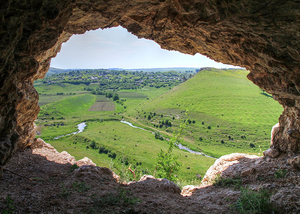
Brînzeni Grottoes
The Brînzeni caves represent a natural monument of its kind geological or paleontological in Edineț district, Republic Moldova. They are located in the Brînzeni reefs, 13 km south-east of Brînzeni village, at the edge of the plateau on the left side of the Racovaț river; Edineț forestry bypass...
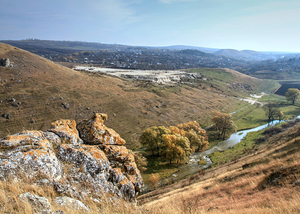
The Brînzeni Gorge
The Brînzeni Gorge is a natural monument of geological or paleontological type with an area of 44 ha. This gorge appeared 15-20 million years ago, when the Tortonian and Sarmatian seas withdrew from our lands. The gorge is composed of limestone formations, which contain particles of coral, molluscs, shells, algae and marine animals.
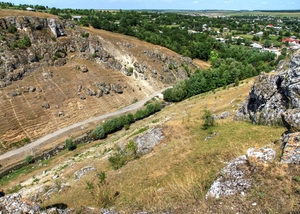
Trinca Gorge
The Trinca Gorge was born thousands and thousands of years ago, when the Draghiste River was relentlessly digging into the lower Badenian-Sarmatian limestone reef. Thus, the picturesque landscape was created with a deep valley, surrounded by rocky walls, steep in places. On the slopes of these great toltres are located several grottoes that shelter the past. In these grottos time has stopped, here haunts the history and memories of the ancient world, which has left us evidence of its existence - skeletal remains of hunted animals and prehistoric Neanderthal people.
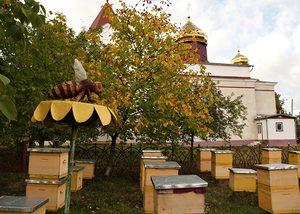
The apiary and the "Land of Honey" Museum
Today the holy place - "Cuvioasa Parascheva" is enjoyed by the faithful people of the village having in its garden an apiary and a new stone church built by the landlord Caceaun in 1775. Boroseni's land of honey is a unique apiary in the north of Moldavia, where the soul is soothed with prayer and the hum of bees. "Go to the bee and see how industrious it is and what skilful work it does. Her work is used for health by kings and commoners alike. She is loved and praised by all" ( Bible parables 6,9.)
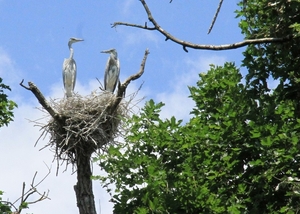
"Land of the Grey Herons"
"The Land of the Great Herons" - is a unique colony of over 1,000 wading birds nesting on oak trees. It is a part of the "Pădurea Domnească" (Royal Forest) reserve. The area of the oak forest where the Grey Herons nest is not very large - about 1 hectare.
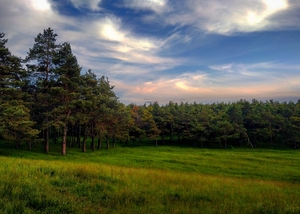
"Pine forest"-Bulhac
"Pine forest" Bulhac On the left side of the gorge you can see the pine forest, called by the villagers, but also by the Soviet cadastral maps - Bulhac. On the top of the cliff there is probably the only karst lake in Moldova. It is of perfectly circular shape, and is located at an altitude of over 100 meters above sea level.
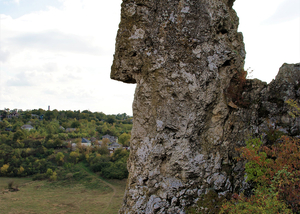
The Râmb Rock
Among the 4 reefs in the so-called Râmbu area, the most representative is at the edge of the village, oval-shaped (oncoid). A cross has been erected on the rock of Râmb, which is called the "Patron Saint Cross".
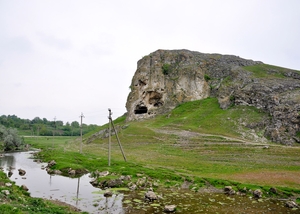
The Butești Cave
The Butești Cave is a very picturesque and interesting cliff, about 2 km long, 60-125m wide. On the side of the cliff facing the village of Butești, there is a cave about 9 square meters deep and 2.5 meters high. This land is full of legends and history. The locals say that more than two centuries ago, these places were covered in forests. A huge snake-shaped rock, with a cave at its edge, also rested here.
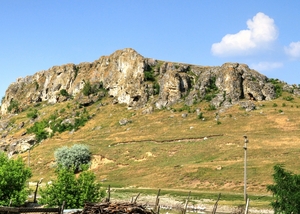
Big Rock
The range of rocks near the village consists of 3 parts, of which the one that lies directly above the village and the valley of the river Camenca is called Stânca Mare (Big Rock), having a length of over 1000 m, width of 100 m and relative height of 40 m. The Camenca River hugs the reef from three streams. This natural fortress was inhabited by humans in the Stone Age.
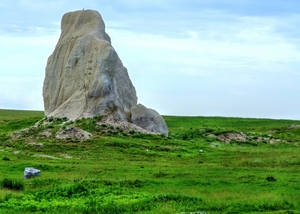
The Dragon's tooths
At the border between the village of Gordinesti and the village of Volodeni there is a cliff 8 metres high and 20 metres long. The travellers who came to visit the landscape reserve "LA CASTEL" gave it the name "THE DRAGON'S TOOTH". From here you can enjoy a breathtaking view of the beauty of nature.
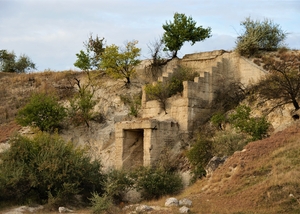
Old Stone Quarry
The old stone quarry of Balatina is located near the village, on the road Balatina-Lipovăț. Inside the site, from where stone was quarried between 1956 and 1991, a water basin was formed, which, due to the low rainfall, has also been drying up lately.
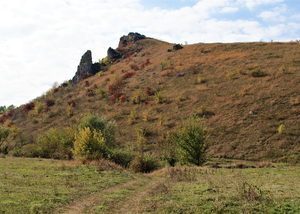
The Tomb of the Giant
The Giant's Tomb also has a legend. It is believed that giant men once lived here. The last of them is buried in this rock. The locals do not work this area, as legend has it that those who dared to work it either died suddenly or fell ill.
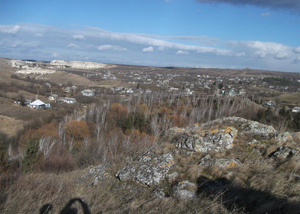
The Țuguieta Rock (Țugurlan)
The legend about the Țugueta rock says that "the children of the giant men who once lived on these places used to play, throwing massive pieces of rock at each other. A sharper piece of stone fell on this rock and because of the more pointed shape of the stone, the name of the rock Țuguieta arose.
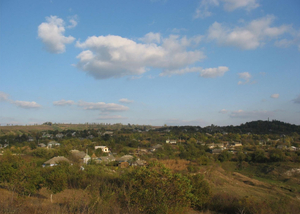
The Mill Rock
The highest place in Brânzeni is called "Mill Rock". In the distant past, there was a water mill near the cliff on the right bank of the Racovăț River in the western part of the village. Not only the villagers came to the mill, but also people from neighboring villages. This is also where the name Stânca Morii comes from.
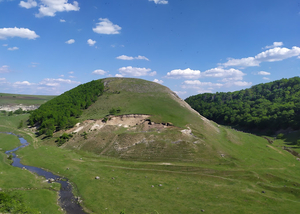
The "LA CASTEL" Gorge
A wonder of nature located above the Racovăț river valley, near the village of Gordinești is the landscape reserve "La Castel". This heritage of the Moldovan countryside is part of the picturesque chain of the Prut Cliffs (Sarmatian coral reefs)
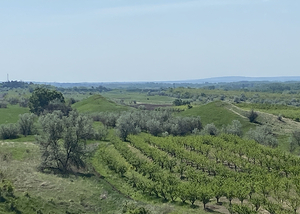
One Hundred Mounds
The natural monument "One hundred mounds" is located between the villages of Cobani and Braniște. It represents a hilly landscape along the Prut and occupies six terraces near the Prut. It is the only place in Europe, where the sediments of the ancient seas, which once bathed this territory - the Tortonian and Sarmatian Seas - are concentrated.
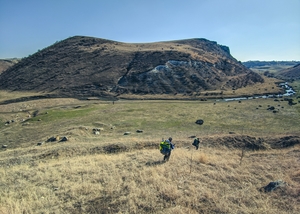
The Rock of Evil Spirits
One could write a book about the Rock of Evil Spirits! It is probably the most mysterious rock in the north of the country, and still undiscovered to the end. Moreover, the villagers have blocked access to the depths of the cave, which is said to be endless.
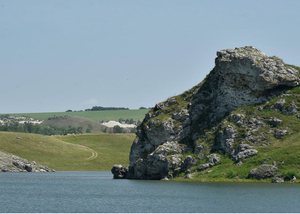
"The Țiglău Cliff"
The cliff is bathed on two sides by the waters of the Ciuhur and shelters on the northern side a rather deep cave, called "Odaia" (Room) by the locals. Until 1978, the Ciuhur river used to meander past this cliff in its usual bed.
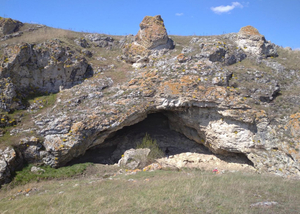
Căsoaia (Big House)
"Căsoaia" (Big House) is the name of one of the two caves on the left side of the "Cascade of Snakes". It is unique in the northern region of the country. The surroundings are fantastic, rich in flora and fauna, especially snakes.
The Lovers' Rock
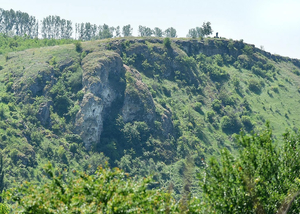
"The Lovers' Rock" has a very interesting and tragic history. It is over 50 metres high and stands on the left bank of the Ciuhur River.