
Tourism
The Stâncile Prutului route represents a fascinating journey through the heart of the wild nature of the Republic of Moldova, which promises to offer you an unforgettable experience. Located in the north-east of the country, on the border with Ukraine, the Prut Rocks are impressive geological formations made up of calcareous rocks carved over millennia by the waters of the Prut River. This route offers the opportunity to explore spectacular landscapes, dense forests and rich biodiversity, while taking you along the banks of the Prut River, revealing some of the natural beauty of the Republic of Moldova. It is an ideal place for hiking, bird watching and connecting with nature in a scenic and wild environment.
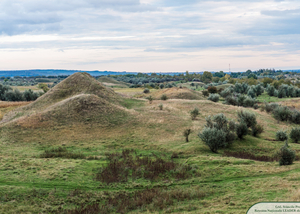
One Hundred Mounds
The natural monument "One hundred mounds" is located between the villages of Cobani and Braniște. It represents a hilly landscape along the Prut and occupies six terraces near the Prut. It is the only place in Europe, where the sediments of the ancient seas, which once bathed this territory - the Tortonian and Sarmatian Seas - are concentrated.
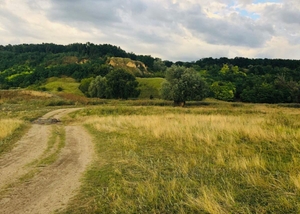
The Wind's Hollow
Venture to the northeast to witness a mesmerizing natural phenomenon carved directly into the clay banks. Known as "The Wind's Hollow," this geological marvel features dome-like structures sculpted by the patient hands of time and weather. It is a rare and wild formation that beckons geology enthusiasts and nature lovers alike to explore its rugged beauty.

At the Pitcher
Hidden near the forester's lodge lies a secluded sanctuary where the dense forest canopy provides cool shade and profound silence. Known as "At the Pitcher," this simple yet welcoming retreat features a resting spot perfectly suited for weary hikers. Pause here to sip refreshing spring water and lose yourself in the rustling leaves and melodious birdsong.

Natural Beach on the Prut river
Just steps from the village stadium awaits a rustic paradise of natural sand. This charming beach offers a summer haven for sunbathing and cooling off in the refreshing waters of the Prut River. It serves as the perfect finale to a day of hiking, offering a spot to swim, relax, and witness unforgettable golden sunsets.

The Mound with Three Shoulders
Along the route to Pascauți, mere hundreds of meters from the village edge, stands a modest mound radiating a unique and vibrant energy. Local folklore claims that storm clouds break against it, shielding the land. It is a serene sanctuary connected deeply to nature, offering a peaceful escape where you can rediscover yourself far from the daily rush.
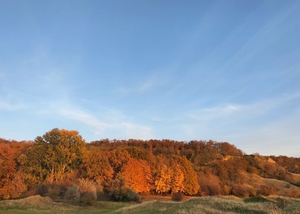
View from the Holm
Sheltered by the forest edge lies the Holm, a spectacular vantage point boasting a panorama that defies description. Gaze down upon the village tucked snugly in the valley, the sprawling fields, and the winding river to see how nature and rural life seamlessly intertwine. It is the ultimate spot for a picnic, a hike, or a quiet afternoon of awe-inspiring contemplation.
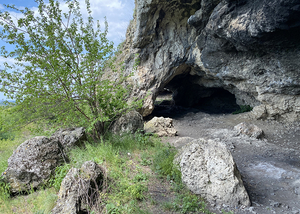
The Grotto of Duruitoarea Veche
At the junction of the Ciuhur and Prut rivers, the pulse of life has been beating since the Lower Palaeolithic, when people used tools made of hewn stone. Here is the earliest monument of human history on the territory of the Republic of Moldova - Duruitoarea Veche.
.jpg "Duruitoarea gorge")
Duruitoarea gorge
The Duruitoarea gorge is a geological or paleontological monument of nature. It is located in the eastern part of the village, on the left bank of the Ciuhur River, a tributary of the Prut. It covers an area of 6.63 ha.
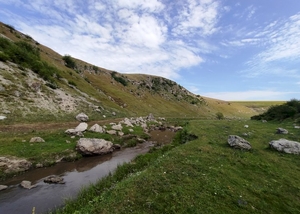
Canyon Horodiște
The canyon with millenary rocks hides 5 larger caves (with a diameter at the entrance of 2 to 4 meters) and many others in the form of burrows with a diameter of up to 1 meter. It should be mentioned that, for a more spectacular hike and for a gradual discovery of the canyon of Horodiște, it is recommended to start from the village of Druță.
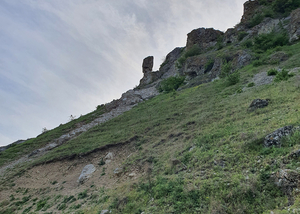
Sphinx of Horodiște
The "Sphinx of Horodiște" is a rock prominence once artificially excavated. The image of the sphinx is more attractive from the village of Druță, where you can see its outline better, but also because it forms a perfect contrast for photographs, with the west behind it.
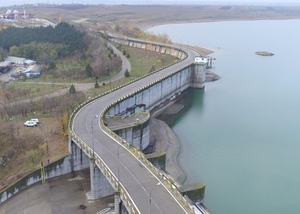
Costesti-Stinca Dam
The Costesti-Stânca hydrotechnical node on the Prut river is one of the most beautiful, but also the most useful hydrotechnical constructions in Romania. The dam impresses not only in Moldova, but also in Europe, being the third in Europe in terms of water retention capacity and the extent of the reservoir.
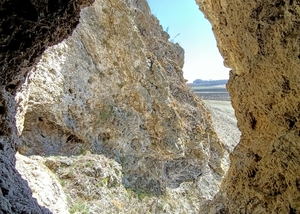
The Țiglău Cliff / The Echo Grotto
At the foot of the pine forest, the rocky Țiglău Cliff rises up. With its unique acoustics, the Țiglău cliff, (the name is said to mean mountain head) has two of the most spectacular caves. One is in the perfect shape of a circle with a diameter of 4 meters at the entrance, with millennia-old fire marks on the cave's vault.
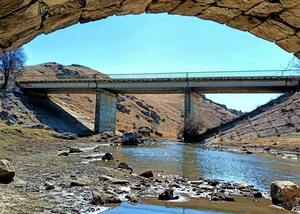
Horodistei bridges
As the whole village stretches only on the right side of the river Ciuhur, like all the villages in the perimeter of Ciuhur, the bridges are specific to the villages on Ciuhur. The only exception is the village of Druță, which is situated on the left side. This is the reason tha, in the past, Druța was called Stângăceni
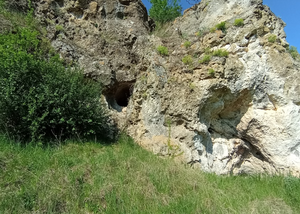
Țugui's grotto
The legend says that 250 years ago, the fearless outlaw Țugui with his Turkish girlfriend Rada, in order not to fall prey to the Turks, hid in that cave or in the forest, from where it later got its name, Rada Forest. And the families of the peasants were in every way against the Ottoman yoke, so they hid in that cave
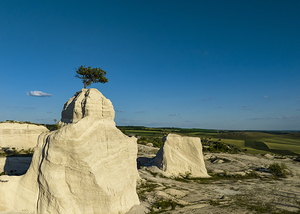
Fetești Gorge - "Little Switzerland"
Surrounded and watched over by the old guardians of the Republic of Moldova - the Prut Cliffs, is a small, hidden corner of heaven, "Moldovan Switzerland".
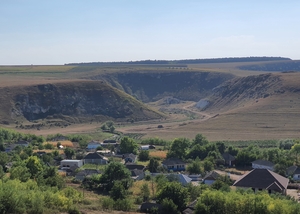
Druță Gorge
A walk on the bottom of the Sarmatian sea. The village is located on the left side of the gorge, intersected by the Ciuhur river, which hides in a long and very winding gorge, which over the course of more than 7 million years, managed to dig a vast valley and quite deep.
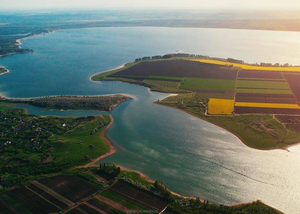
The Costești-Stânca reservoir
The Costești-Stânca reservoir is a lake with an area of 59 square km, located on the Prut river at the border between the Republic of Moldova and Romania .
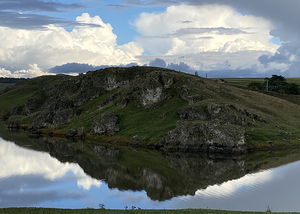
Draghiște River
The hydronym Draghiște, according to the late scholar Ion Dron, is old, of Daco-Getic or old Romanian origin and passed through the Slavic lineage - draga (Bulgarian, Serbian, Slovenian), draha (Czech), droga (Polish), meaning in these foreign languages - "a strait, a gorge, a dip (in relief), a place where water drains, a valley and even a road; a path".
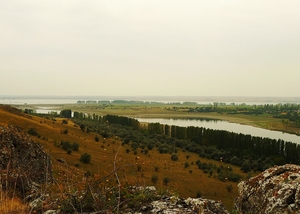
Ciuhur River
"Ciuhur River" is the river that flows through the village of Văratic, but has its sources near the small town of Ocnita and carries its waters on the territory of the districts of Ocnita, Edinet, Riscani. It flows into the Prut River north of Costești. Its length is 90 km.
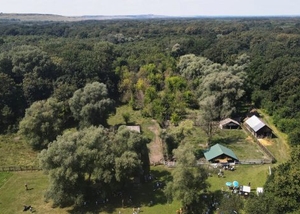
Bison's Habitat
Near the village of Moara Domnească is the "Zimbrăria", a fenced-in forest site covering 32 ha, with 7 bison. The bison is the only species of wild animal in the bovine family that has survived to the present day.